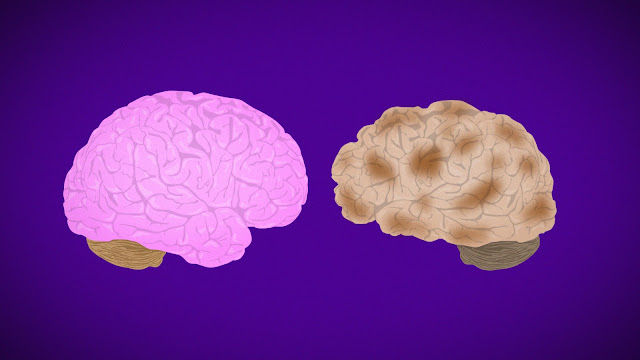
What may be good for the heart could be bad for the brain. Lowering cholesterol, especially bad LDL cholesterol, appears to reduce the risk of heart attacks. But new studies suggest that very low cholesterol might pose unexpected problems for the nervous system.
It is certainly true that some people who take cholesterol lowering medicines report negative effects on their brain function. Problems with memory and concentration are not uncommon. It’s not assured, of course, that the problems these people experience are a direct consequence of lowered cholesterol levels in the body. However, the possibility still exists.
Why cholesterol is essential for brain
One of the most abundant materials in the brain and the rest of our nervous system is a fatty substance called myelin. Myelin coats every nerve cell and every nerve fibre like the insulating cover around electric wires. Apart from insulation, it provides nourishment and protection for every tiny structure in our brain and the rest of the nervous system. People who start losing their myelin develop a condition called multiple sclerosis. Myelin is mostly composed of cholesterol. If you start interfering with the body’s ability to produce cholesterol, you put the very structure of the brain and the rest of the nervous system under threat.
The synthesis of myelin in the brain is tightly connected with the synthesis of cholesterol. Foods with high cholesterol and high animal fat content are an essential medicine for a person with multiple sclerosis. One of the most wonderful abilities humans possess is the ability to remember things. But how do we form memories? By our brain cells establishing connections with each other called synapses. The more healthy synapses a person’s brain can make the more mentally able and intelligent that person is. Researchers have discovered that synapse formation is almost entirely dependent on cholesterol, which is produced by the brain cells in a form called apolipoprotein E. Without the presence of this factor we cannot form synapses, and hence we would not be able to learn or remember anything. Memory loss is one of the side effects of cholesterol-lowering drugs.
Since cholesterol accounts for healthy brain function, changing your lifestyle can improve your cholesterol. A diet low in saturated fat may help reduce LDL “bad” cholesterol. Regular exercise may be helpful in boosting HDL “good” cholesterol.