Showing posts with label heart disease. Show all posts

Wednesday, 30 August 2017

Is High Cholesterol Affect The Body?

high cholesterol, how to reduce cholesterol, how to lower cholesterol, high cholesterol foods, heart disease, ldl cholesterol, reduce cholesterol naturally, lower cholesterol naturally,


Cholesterol is not necessarily harmful for humans since their body requires it for making vitamin D, hormones and digestive fluids. However having too much LDL (lowdensity lipoprotein or bad cholesterol) in the body can trigger problems of the heart and increase the risk for heart attack and stroke.

In this article we are going to discuss the kinds of health issues that might occur due to a high level of cholesterol in the body.

Risk of Atherosclerosis

When there is an excess of LDL in the human body and it tends to build up in the arteries making them clogged and inflexible. The stiffness of the arteries is a condition called atherosclerosis. Blood doesn't pass easily through the hardened arteries which is why heart has to overwork for pushing the blood through the stiff arteries. Once arteries start to clog up, there is increased chance of experienced various heart related problems.

Risk of Angina and Peripheral Arterial Disease

When the plaque starts to deposit on the coronary arteries, it disrupts the flow of blood to the heart. This leads to intense chest pain called angina. Patients of angina are at a much greater risk for heart attack. When the plaque in the coronary artery clots up or breaks off it could block the flow of blood resulting in a heart attack. Plaque build-up can also block the blood flow to your limbs and stomach- a disease called PAD or peripheral arterial disease.

Risk of Stroke

Decreases flow of oxygen rich blood to the brain due to a ruptured or clogged artery greatly increases the chances of a stroke. Plaque deposition in the blood vessels can eventually result in a stroke because of disrupted blood flow to the brain.

Problems in the Digestive System

Cholesterol is essential for the production of bile and this forms an essential part of our digestive system. However, an excess in the bile converts into crystals and eventually into stones in the gall bladder, creating other equally dangerous side effects.

Stomach Ache

Extremely highcholesterol level can result in fat deposits on the liver, spleen, ligaments and skin. When the spleen or liver enlarges because of fat deposits, it causes severe stomach ache by putting pressure on the other organs of the abdominal cavity.


The higher the cholesterol levels in your body, the greater the chances of developing diseases of the heart and blood vessels. High cholesterol doesn't come with any explicit symptoms which is why most of the patients get diagnosed when it's too late. Make sure to get your levels checked on your next visit to the physician.

Wednesday, 2 August 2017

Which is Better for Heart Patients: Bypass Surgery or Ballooning (PTCA)

ballooning, heart patients, bypass surgery, coronary heart disease, heart disease, cholesterol


One of the very confusing issues for heart patients is to decide regarding bypass surgery or ballooning, as to which one to choose. Whenever coronary angiography is done many a times when a patient is offered ballooning he gets scared as to why not get surgery which he thinks is a more permanent solution to the problem. So lets us see what the truth behind this decision making is.

Let me first of all tell you little bit about the coronary heart disease natural history. As you know the coronary heart disease starts with the deposition of cholesterol in the coronary arteries (Plaques). This is a very slow process and takes years. Over years it increases and a time comes when it causes sufficient luminal narrowing as to cause ischemia/angina. In fact the deposition starts while in young age.In fact the preventive measures for coronary heart disease should start in the young age. Now the pattern of deposition of cholesterol in the arteries is very variable in different individuals. This deposition can be in a very short segment of the coronary artery or can be at multiple levels within a single coronary artery or it can be very diffuse throughout the vessel. Also sometimes a pattern of distal involvement is also seen in which only the farthest part of the vessel is involved and the proximal part is normal.

Now let us see how can we treat it

The best method to treat the existing blockage would be a medicine which dissolves the cholesterol which is deposited in the coronary arteries. Unfortunately no such medicine is available till now.Statins are one such drugs which lower cholesterol in the blood and have been claimed to reduce plaques in these coronary arteries. But this effect is very minimal and not predictable.We do give these drugs to most of the patients with the hope that even if it does not dissolve the existing blocks at least it will prevent the progression of the blockage to some extent and this is true also.

Now what are the options we have to treat these blockages?

We have three options. One is to continue the patient on various medicines which act by different mechanisms so as to suppress the symptoms and prevent the progression of the disease. Patients became symptoms free and feels much better. But this option we give only to patients in which the disease is minimal, does not involve the main arteries, or in patients in which it involves main arteries but in whom surgery or PTCA can not be done for technical reasons or if the assessment says that these procedures would not give benefit even if performed. Something like if the disease involves distal vessels as I discussed earlier.

Second method is to treat these blockages by ballooning. In medical terminology we call it PTCA (percutaneous coronary angioplasty). This is a technique which was started by Gruenig way back in 1977. Since then it has got enormous changes. The technique is at its near perfection. In this technique a catheter is inserted into the coronary artery from the groin after local anaesthesia.Through the catheter a very fine metallic wire is inserted into the coronary artery and is passed across the blockage.Over the wire a balloon is passed into the coronary artery across the blockage and is inflated.By this the deposited cholesterol is pressed into the vessel wall and blockage is opened. Now there is a tendency of the vessel again to close as this is a elastics structure .To prevent this a metallic mesh (Stent) compressed over a balloon is passed into the same segment and is inflated to leave the mesh there. Sometimes if the blockage is too much then a cutter (Rotablator or atherectomy device) is also used to debulk the lesion. Now the biggest problem with this technique is 20% chance of reblockage at the same site within six months which sometimes can be fatal also. Third Option is bypass surgery. Bypass surgery is a major surgery. In this surgery artery and veins taken from the body are anastomosed between aorta and beyond the blockage so as to bypass the blockages.

Now let us see which is better

As you know now, both the methods are same. As neither is permanent cure. Both are an attempt to take care of the existing blockages. New blockages can keep appearing at the same sites, other sites and in grafts and both do not treat the whole vessel or the very cause of blockage for which we have to depend on medicine and life modification methods any way.

That means we have to continue the medicines even after PTCA or CABG because the disease can still occur with the same probability at other points in the same or other coronary artery.

In a given patient we normally see the whole picture and take various parameters as to which method to choose.

  • First is the no of vessels involved
  • Second is the nature of blockages (Proximal, long segment, Bifurcation, trifurcation lesions tortuous vessels etc)
  • Third is associated comorbid illnesses (Like Diabetes, CVA etc)
  • Fourth is the age, body activeness and financial condition of the patient 

If a patient has a single vessel involved then the best method is PTCA with stent. Sometimes in a single vessel if this vessel is LAID and the blockage is very proximal or right at the origin (Ostial) and especially if patient did not have any heart attack, that means the whole area is alive or the patient is diabetic then we do consider CABG as a good option.But even then lot of patients as well as doctors do consider PTCA as a good first option as now we have the technology available to tackle these lesions and even if reblockages occur surgery still can be done. Only thing is that patient suffers financially and requires another procedure if restenosis occurs. In fact now we have another stent (Cypher) which is launched recently which has restenosis rate of nearly 0 to 1%.

Patient with triple vessel disease should undergo CABG is a wrong statement. Patient with triple vessel disease should undergo revascularization is right statement. If the patient has double or triple vessel disease and all the lesions can be tackled by PTCA. Then this is the first option given to the patient. But the cost is more like for three vessels if three stents have to be placed then the expected cost of the procedure is around 2.25 lakhs rupees and also in 20-30% patients should be ready for CABG if restenosis occurs. With Cypher stent we are hoping that this figure of restenosis would drop to less than 2% but the cost of the procedure would increase tremendously. Surgery is a good option for triple vessel disease. It requires less money. But in surgery there is recovery time of minimum of 2 Months before patient really starts earning again. Also there is 2 to 4% chance of graft occlusion. So that means if the patient can afford, the lesions are amenable to PTCA and patient is willing to undergo surgery if required later (Becoming less and less day by day) the PTCA is a good first option as patient is discharged in 48 hours and patient starts working next day.This is the truth. Now comes the confusion in day to day practice when patient says that one doctor is asking for PTCA and another doctor is suggesting surgery. This is because most of the patients now can be managed by PTCA with stenting and some doctors by telling patients that surgery is permanent solution may misguide.

If the patient has double or triple vessel disease but the lesions can not be tackled by PTCA or the finances are limited or the willingness for another procedure is less then surgery is a good option.But even after surgery new blockages keep appearing and they again may have tobe tackled by PTCA or Re CABG again going by the same criteria as whether the new blockage is at one site, at multiple sites.At each stage we keep assessing the patient as a whole whether he can withstand which procedure more safely (Both physically and financially). At each stage the aim is to revascularize the maximum no of vessels. Sometimes in triple vessel disease patients doctors suggest that one vessel can be opened by PTCA and rest can be left if they are small and especially if they are difficult for the surgery also. As if you put a graft in very small vessel it does not last long If the patient has diabetes then the chances of restenosis after PTCA are more and there is a tendency to offer CABG especially in triple vessel disease.

If the patient is very old, with less mobility and if considered high risk for anaesthesia then PTCA, even if complete revascularization (That means you can't open all the blockages) is not possible, is a better option. At this time if some doctor says that incomplete work has been done is wrong.

Some doctors still misguide the patients by saying that since both are not the cure, and the new blockages keep appearing and they still can get heart attacks , so they should not undergo either PTCA or CABG and stick to medicines and other lifestyle modifications. This is wrong because both prolong life by avoiding major fatal heart attacks, both decrease morbidity. As the technology is improving, more and more patients even with complex anatomy can also be tackled with PTCA, which were previously managed by surgery only.

In the present era for a given patient mostly both the options of revascularization i.e. PTCA or CABG are available and a decision has to be made with mutual discussion of merits and demerits of both the procedures with the patient after studying the angiography report, heart pumping function and other comorbid illnesses. And importantly it is very important to understand that neither is permanent cure. Both are an attempt to take care of the existing blockages. New blockages can keep appearing at the same sites, other sites and in grafts. That means we have to continue the medicines and life modification methods even after PTCA or CABG.

Monday, 24 April 2017

Thallium Stress Test: Need, Procedure, Risks, and Results

Thallium stress test, chest pain, worsening angina, heart disease, heart attack, why thallium stress test is done, Thallium stress test Procedure, Risks of a Thallium stress test, Thallium stress test risks, Thallium stress test results, results of a  Thallium stress test, heart complications


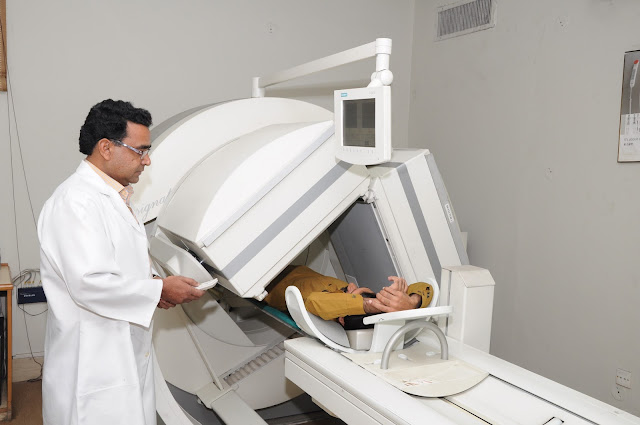
Thallium stress test is a test which measures the blood flow into the heart, while your body is at rest and when your body is engaged in any physical activity. Thallium stress test is also known as a cardiac test or nuclear stress test. The thallium stress test shows the size of heart chambers if any heart muscle is damaged or defected due to a heart attack in the past. The thallium stress test also shows if a heart is pumping blood properly and checks whether all the coronary arteries are supplying blood to the heart. The test measures the ability of your body to take the stress.

Thallium stress test is done:

Thallium stress test Procedure

The thallium test is carried out at a hospital, diagnostic centre, or at an outpatient clinic. During the thallium test procedure a nuclear liquid known as radioisotope is inserted through an intravenous sedation. Sometimes, instead of radioisotope, a doctor may use a radiopharmaceutical medication such as thallium or sestamibi. The nuclear liquid inserted into a patient, flows through a bloodstream and reaches the patient’s heart. After that, a camera like device known as gamma camera is used to measure the outcomes of the test. The gamma camera identifies the radiation and display the problems associated with the patient’s heart. The test is done in two parts-first a patient is asked to lie down and relax for 15-20 minutes and in the second part, the patient is asked to run on a treadmill or pedal an exercise bicycle for half an hour.

Risks of a Thallium stress test 

The Thallium stress test is usually safe and there are rare chances of any complications. The risks associated with a thallium stress test are same as with other medical procedure. Some risks related with thallium stress test are listed below. 


Thallium stress test results 

The results of thallium stress test depend on the patient’s age, medical history, and other health issues. The normal result indicates the healthy flow of blood to the heart through the coronary arteries. The abnormal result shows the poor flow of blood to the heart due to a blockage or narrowing down of an artery that supplies blood to the heart. The abnormal thallium stress test results also reveal the coronary artery disease or other heart complications.

Friday, 4 November 2016

After Diwali celebrations, intoxication in the air at its peak in Delhi


Delhi has turned into a smog city the morning after the Hindu festival of Diwali, when hundreds of thousands of people in the Indian capital celebrate by setting off crackers and fireworks.

Delhi, which is one of the world’s most polluted cities, already has poor air quality due to road dust, open fires, vehicle exhaust fumes, industrial emissions and crop burning in neighbouring states. But the density of some harmful particles and droplets in the air drastically magnifies post Diwali and can slash all safety limits (42 times this year).

An air quality station at Chanakyapuri, recorded a PM2.5 level of 999 on the day after Diwali. India’s pollution control board sets the safe limit for PM2.5 - which measures particulate matter smaller than 2.5 micrometres - at 60.

When compared with Delhi, London’s PM2.5 level recorded on Monday morning was 139. However, on an average day, this figure revolves around 16.

PM2.5 particles and droplets are considered to be the most harmful kind of air pollution because they are fine enough to evade the body’s natural filters, penetrate the lungs and enter the bloodstream. Children are worst affected with the rise in PM2.5 levels. Short-term exposure can trigger coughing and eye/throat irritation, while longer term exposure is strongly associated with reduced lung function, heart disease, lung damage and lung cancer.

In 2015, a study revealed that Delhi’s 4.4 million school children had compromised lung capacity and will never be able to recover from it.

According to WHO, India also has the world’s highest rate of death from respiratory disease, five times that of the UK and twice that of China.

Delhi’s air remains so polluted throughout the year that it doesn’t really have room for additional pollution during Diwali. According to experts, smog released by the fireworks was worsened by the seasonally cooler temperature and slowing winds, which meant the air doesn’t blow away and all the pollution that happens inside the city gets trapped at the ground level, very close to the noses.

Where we still have a lot more to do is to encourage people to find solutions to the problem. We need to understand that controlling pollution requires some tough decisions, and the government has a big role to play.

Monday, 24 October 2016

Carbohydrates: Choose complex carbs instead of simple ones


Most people think carbohydrates are the wicked stepmother in our body’s fairy-tale, poisoning and ruining it. Accepted, the metaphor might be a bit exaggerated, but it is a fact that the unaware eye views carbs negatively.

Carbs have not always been viewed upon as bad for the body. And, to be honest, they aren’t. What we need to understand is how different types of carbs affect the body differently.   
          
They can be broadly classified into two groups: simple and complex carbs. Simple carbs are contained in processed foods like white flour and white sugar and in a wide variety of products that are made using them. Such carbs are bad for the body, and although we know we should avoid them, we are attracted to them like bees to nectar. Naans, roomali rotis, biscuits, cakes, mithais, chocolates and soft drinks are just a few of the sources of simple carbs.

Complex carbs are found in veggies, fruits, dry fruits and whole grains like rice and millets. They are healthy and help in stabilising blood sugar levels and regulating hunger, lowering weight and cholesterol levels.

Comparing to these, simple carbs make the liver and pancreas work overtime as they cause a sudden rise in blood sugar levels. And just after this sharp spike, the blood sugar levels fall dramatically. The body then craves food and the individual becomes tired, restless and irritable.


Simple carbs can also cause weight gain, chronic disorders and diseases like heart disease, gall stones, kidney stones, arthritis as well as cancer. But the fact is that your daily diet must contain at least 60 per cent of carbs. Out of this, 40 per cent of carbs should come from veggies and fruits alone. You need these for energy and with all the antioxidants, minerals and vitamins that they provide; this is the best deal you can get. 

Sources of good carbs, whether simple or complex are:

  • All fruits and vegetables: They are healthy complex carbs, full of vitamins, minerals, fibre and not high in calories, making them suitable for weight loss.
  • Grains: They offer both healthy complex carbs and fibre, ideal for weight-loss. Due to the low-calorie and high-fibre content, it satiates hunger for a longer duration.
  • Yams: A good source of potassium, the mineral which helps control blood pressure. As it is rich in fibre it also slows the rate of absorption of sugar in the bloodstream.
  • Sweet potato/potato: It contains Vitamin C, which builds immunity, Vitamin D, which increases energy levels and builds healthy bones, iron and magnesium which keep the heart healthy.
  • Corn: This is high in fibre and low in fat. It contains both soluble and insoluble fibre reducing cholesterol levels, lowering the risk of heart disease and preventing constipation.
  • Dry fruits: Raisins, apricots, prunes, figs and dates are low in sodium and extremely low in saturated fat and cholesterol. They are a good source of dietary fibre and satisfy sweet cravings.

Sunday, 16 October 2016

Monitoring the Fat in Your Diet


Very little disagreement exists among scientists and researchers about the need to limit fat intake! Everyone agrees that you should eat no more than 30 per cent of your diet as fats. As with protein, the type of fat that you eat needs to be considered as well as the quantity.

Dietary fat comes in several forms

  • Saturated fat is the kind of fat that mainly comes from animal sources. For example, butter is made up of saturated fat. Bacon, cream, cheese, pastries, cakes, biscuits and chocolate are other examples that contain saturated fat. Two non-animal sources of saturated fat exist: Palm oil and coconut milk. Eating a lot of saturated fat increases the blood cholesterol level.
  • Unsaturated fat comes from vegetable sources such as nuts and seeds. It comes in several forms.
  • Monounsaturated fat doesn’t raise cholesterol. Avocado, olive oil, canola oil, olive and canola spreads are examples. The oil in nuts like almonds and peanuts is monounsaturated.
  • Polyunsaturated fat also doesn’t raise cholesterol but does cause a reduction in the good or HDL cholesterol. Examples of polyunsaturated fats are soft fats and oils such as sunflower, soybean, sesame oil, oily fish (trout) and sunflower spread.

Protection against heart disease comes from including essential fatty acids, found in fish oils, in your diet. If you dislike fish or just can’t eat the required two to three serves of it each week, fish oil capsules are a good substitute. Just make sure when buying the capsules that they contain sufficient quantities of the two active ingredients (EPA) and (DHA). Diabetologists recommended you take between 1,200 milligrams and 3,000 milligrams of a combination of these active ingredients each day. To make it easier, many formulations of fish oil are now concentrated, meaning you only need to take one or two capsules per day to reach the 1,200 milligrams per day target.

Getting Enough Vitamins, Minerals and Water

Your diet must contain sufficient vitamins and minerals for good health, but the amount you need may be less than you think. If you eat a balanced diet that comes from different foods, you generally get enough vitamins for your daily needs.

  • Vitamin A: Needed for growth and development, immune function, bones and healthy skin; helps with night vision. Found in eggs, oily fish, dairy products, orange and green vegetables and orange fruits.
  • Vitamin B1: Converts carbohydrate into energy. Found in wholegrain cereals, meat, fish, nuts and yeast extract.
  • Vitamin B2: Needed to release energy from food. Found in milk, cheese, fish, almonds, eggs, green vegetables and fortified cereals.
  • Vitamin B12: Keeps the red blood cells and the nervous system healthy. Found in Animal foods only; for example, meat, seafood, eggs.
  • Vitamin C: Helps maintain supportive tissues. Found in Fruit and some vegetables; for example, tomatoes and capsicum.
  • Vitamin D: Helps with absorption of calcium. Found in oily fish, egg yolk and fortified milk. Also made in the skin when exposed to sunlight, although this process declines as you age.

Minerals are also key ingredients of a healthy diet. Most are needed in tiny amounts, which, with a few exceptions, are easily consumed from a balanced diet. These essential minerals are as follows:

  • Calcium, phosphorous and magnesium build bones and teeth. Milk and other dairy products provide plenty of these minerals, but evidence suggests that people aren’t getting enough calcium. Pregnant women and breastfeeding mothers should have 1,000 milligrams, particularly in the final three months of the pregnancy and throughout the breastfeeding period.
  • Iodine is essential for production of thyroid hormones. Iodine is often added to salt in order to ensure that people get enough of it. In many areas of the world where iodine is not found in the soil, people suffer from very large thyroid glands known as goiters.
  • Iron is essential for red blood cells. Iron is obtained from red meat and iron-fortified breakfast cereals. Green leafy vegetables provide small amounts of iron; however, it’s not in a form that’s easily absorbed by the body. 

Water is the last important nutrient but it’s by no means the least important. Your body is made up of 60 per cent water and all the nutrients in your body are dissolved in it. You need to drink about six to eight glasses, or one and a half to two litres, of fluid per day — more if the weather is very hot or you’re exercising a lot. Your thirst will tell you how much you need.

Tuesday, 4 October 2016

Complications of Having High Blood Pressure


A complication is defined as concurrent disease, accident, or adverse reaction that aggravates the original disease. Prolonged hypertension adds injuries to:

  • Heart
  • Kidneys
  • Brain
  • Retina
  • Vascular System

Hypertensive Heart Disease

Persistent elevation of blood pressure harms the whole heart or parts of it. As a result, the individual may end up with hypertensive heart disease such as left ventricular hypertrophy which refers to the growing of the left side of the heart, or, ends up with cardiac arrhythmias due to damage to the conduction system. As well, elevated blood pressure may contribute to coronary artery disease where the arteries of the heart itself may be damaged or unable to supply enough oxygen to the heart muscle or myocardium. Last but not least, when the heart labours under abnormal conditions, it is forced to work more than usual and eventually becomes bigger and starts to have greater difficulty supplying blood, oxygen and nutrients to peripheral organs and tissues; this condition is known as congestive heart failure.

Blood Pressure and Kidneys

At some point, blood flows through the kidneys by means of small arteries that wind up in an intricate and fascinating structure called the glomerulus where the process of blood filtration occurs. Blood passes with an exact increased pressure through the glomerular tuft, in order to sift the unwanted material. The glomerulus is part of the filter unit called nephron. There are more than a million nephrons in each kidney. They are in charge of the filtration of chemicals, toxins, water, and unwanted materials from blood. Kidneys regulate the balance of water and chemicals in the body. Prolonged high blood pressure disrupts the normal function of filtration that eventually causes damage to the kidney, generating a condition known as chronic renal disease. Appropriate kidney function is crucial for life to be continued.

Hypertension and Effects on the Brain

Prolonged high blood pressure levels affect the small arteries in the brain resulting in lesions that bleed into it. As a result, the individual is at serious risk of having a stroke caused by either haemorrhage or a formation of a clot; this condition is known as thrombosis or embolism which profoundly affects the quality of life of the individual.

Hypertension and Impact on Retina

Blood flows through the retina by means of tiny, small arteries and veins that run in the back of your eye. Like other vessels they, as well, can be damaged by high blood pressure. This condition is known as retinopathy. Other changes can result from accumulation of fluid under the retina, and block of the blood flow to the optic nerve; as a result, you could bleed within your eye or have vision loss.

Hypertension and Impact on Vascular System

The vascular system consists of arteries and veins. Arteries are the ones that carry the blood under pressure to nurture the tissues. A healthy artery is flexible, strong, and elastic with a smooth inside lining. If you have high blood pressure, you may end up with lesions to the smooth inside lining of the arteries. Consequently, the blood is not freely flowing due to the hardening of the arteries, condition known as arteriosclerosis. Besides, the fat from your diet enters your bloodstream, and the fat starts to collect in the arteries, causing a disorder known as atherosclerosis. In this condition, atheroma, which is fat collection, may block blood flow to any organ in your body, such as heart, brain, kidneys, arms, and legs. On the other hand, the constant high pressure of blood might weaken a section of an artery wall generating a condition called aneurysm, which is the bulging of a part of an artery. The potential rupture of an aneurysm is a grave life-threatening internal bleeding condition.


Wednesday, 15 June 2016

What responsibilities do a cardiac surgeon undertakes?

A cardiac surgeon is a well trained, accredited healthcare professional who performs diverse surgical operations on human hearts. Helped by different speciality surgeons and nurse practitioners, he or she makes the best use of surgical and robotic equipments to implement intricate surgeries. Usually, he is required to perform emergency surgeries to save people from life threatening conditions but one has book an appointment prior to visiting him. Most surgeons practice with big, reputed hospitals and heart care centres, though some opt for private practice as well.

Surgeons operate on individuals with several health problems and those who have developed heart ailments due to bad eating habits, age, cancer, diabetes etc. A cardiac surgeon is responsible for conducting tests and examinations to detect the presence of any physical aberrations or functional problems, consult the patient and fellows about the test reports and determine if a surgery is obligatory. He conducts operations with utmost care, making sure the patient is safe. Post surgery, he himself and along with practising nurses monitor the vital signs like blood pressure, heart rate of the patient to ensure a successful surgery.

Some cardiac surgeons are expert in certain procedures. For instance, a paediatric cardiac surgeon operates on infants, small kids or adolescents. Others have specialised knowledge on procedures such as valve repair & replacement, robotic cardiac surgery, heart transplants and many more. Some professionals choose to study dummy hearts and other implants.

In order to become a qualified cardiac surgeon, a person should complete medical graduation followed by a four year doctoral program from a certified medical school. After that, he needs to serve as an intern at a hospital and assume a seven to ten year residency. The latter part of a surgeon’s residency is dedicated towards performing heart surgeries under close supervision of the senior professionals.


Since medical technology is evolving at a rapid pace, it requires cardiac surgeons to engage in regular education and stay updated on the latest evolvements. With an increasing population of old people and advent of new diseases, the demand for knowledgeable surgeons is on the rise. Patients prefer those with computer expertise as these days as the operative machinery requires data interpretation. 

Types of surgeries a cardiac surgeon performs

  • One of the most prevalent surgeries is coronary artery bypass grafting. Cardiac surgeons repair the aneurysms to the aorta, which is the key vessel coming out of the heart.
  • Another type of surgery is the replacement of a heart valve. There are four valves but most commonly only two valves, mitral and aortic are replaced. This surgery becomes relevant when there is inadequate blood flow to the heart affecting its proper functioning.
  • Heart transplant operation is another type of cardiac surgery which is performed when a person suffers from heart failure. While the patient waits for a donor, a cardiac surgeon implants a ventricular assistive device. This is necessary for non-stop blood pumping. When the heart fails, it stops pumping blood to the body. The only way left is to go for a heart transplant