Showing posts with label brain disorder. Show all posts

Thursday, 20 July 2017

Brain Abcess : Causes, Risk Factor, Diagnosis, Symptoms and Treatment

brain abcess, causes of brain abcess, risk factor of brain abcess, symptoms of brain abcess, treatment of brain abcess, brain haemorrhage, brain health, brain disorder,


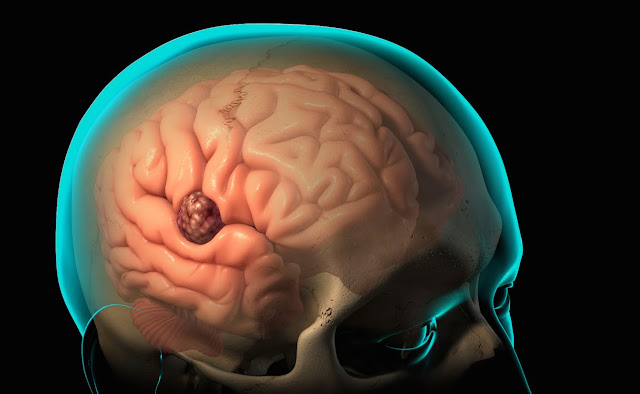
A brain abscess is a collection of pus, immune cells, and other material in the brain, usually from a bacterial or fungal infection. It is mostly formed by bacterial infection; a fungal infection can be caused in weak immune system.

  • Brain abscess forms when fungi, viruses, or bacteria reach your brain through a wound in your head or an infection somewhere else in the body.
  • Heart and lung infections are among the most common causes of brain abscesses.
  • But brain abscesses can also begin from an ear or sinus infection, or even an abscessed tooth.
  • It can occur in any age, but most frequent in ages above 60.


Causes of brain abscess:

  • Brain abscesses commonly occur when bacteria or fungi infect part of the brain. As a result, swelling and irritation (inflammation) develop.
  • Infected brain cells, white blood cells, live and dead bacteria or fungi collect in an area of the brain. Tissue forms around this area and creates a mass, or abscess.
  • The germs that cause a brain abscess can reach the brain through the blood. Or, they enter the brain directly, such as during brain surgery. In rare cases, a brain abscess develops from an infection in the sinuses.
  • The source of the infection is often not found. However, the most common source is a lung infection. Less often, a heart infection is the cause


Risk factors of brain abscess:

Certain risk factors which increases the chances of infection may include:

  • A compromised immune system due to HIV or AIDS
  • Cancer and other chronic illnesses
  • Congenital heart disease
  • Major head injury or skull fracture
  • Meningitis
  • Immunosuppressant drugs, such as those used in chemotherapy
  • Chronic sinus or middle ear infections
  • Certain birth defects allow the infection to reach brain more easily, such as tetralogy of fallot, which is a heart defect.   


Diagnosis of brain abscess:

Diagnosis of brain abscess may be done by certain methods, which include:

  • Blood cultures- to know for infection in the blood
  • Chest x-ray- To see any suspected infection in lungs
  • Complete blood count (CBC)
  • Head CT scan
  • Electroencephalogram (EEG)-to test the electric impulses in the brain
  • MRI of head
  • Testing for the presence of antibodies to certain germs
  • Lumbar puncture or spine tap- Taking a small amount of cerebral spinal fluid to see any further problems in brain other than infection


Symptoms of brain abscess:

Certain symptoms may include:

  • Differences in mental processes, such as increased confusion, decreased responsiveness, and irritability
  • Decreased speech
  • Decreased sensation
  • Decreased movement due to loss of muscle function
  • Changes in vision
  • Changes in personality or behaviour
  • Vomiting
  • Fever
  • Chills
  • Neck stiffness, especially when it occurs with fevers and chills
  • Sensitivity to light


Treatments of brain abscess:

Brain abscess is a medical emergency; it should be treated immediately to prevent any further worsening condition, which may include:

Medication is the treatment procedure if certain abscess are:

  • A small abscess (less than 2 cm)
  • An abscess deep in the brain
  • An abscess and meningitis
  • Several abscesses (rare)
  • Shunts in the brain for hydrocephalus (in some cases, the shunt may need to be removed temporarily or replaced)
  • An infection called toxoplasmosis in a person with HIV/AIDS


Surgery is  done in certain cases:

  • Increased pressure in the brain continues or gets worse
  • The brain abscess does not get smaller after medicine
  • The brain abscess contains gas (produced by some types of bacteria)
  • The brain abscess might break open (rupture)
  • The brain abscess is large (more than 2 cm)


Surgical technique is always avoided as it can bring certain complications

Saturday, 2 April 2016

World Autism day: A better understanding makes a huge difference

Today, the number of children born with Autism is causing researchers and parents alike to be more concerned on how they could make the lives of the affected children better and if possible get a cure for the disorder once and for all.


Autism is a result of a disorder of the neural development seen from the impaired social interaction and communication of the child. The child also shows signs of restrictive and repetitive behaviour not common with normal children. At the age of three years old the signs are visible and the child has problems in communicating with the parents. The child grows with a non-relational attitude and hardly responds normally to the external world as a normal child would do. The stumbling block that has all researchers working day and night is to get an explanation how autism affects the information processing in the brain and whether there could be a way to curb the disorder while the child is still at a young age.

Autism is among the three known brain disorders in the ASDs, otherwise known as the autism spectrum. The other two disorders are Aspergers syndrome and Pervasive development disorder. Over the past years, experts have estimated that in three to six children out of every one thousand will have this unpredictable disorder. A closer survey shows that the males have a four times greater possibility than females of having autism. But the condition on girls is much more severe compared to that in males.

The disorder is marked by difficulties in social interaction; the child tends to be avoiding having relationships with other children. The child also has problems in communicating. The third sign is repetitive behaviours.

The condition of autism has heavy implications on the child. It is observed that a child with autism will be locked to a particular activity and have a rigid pattern of thinking. The child has no touch to the world that surrounds him/her, people can pass by the child without the child reacting or sensing any change. Critical observations have shown in extreme cases that some infants have been less sensitive to burns or bruises and may go to an extent of causing self mutilation.

The cure for autism is still not available but research continues feverishly and we certainly hope and pray that there will be a solution or cure one day.

The condition is believed to be genetically inherited and also may have been due to roles played by the environment. Although not clearly identified as to how but that is what many experts currently believe. Despite the luck of a cure for autism, therapies are carried out on the infants to remedy the specific symptoms in an effort to bring substantial improvement. It is believed the earlier the therapy is practiced on the infant showing signs of autism, the better.

The fight to get a cure is on and in every search, an answer can eventually be found. We hope that the cure will be found very quickly.

Just because your child may be shy or withdrawn does not automatically mean they have Autism but you should keep an eye on them for particular signs of autism so that if necessary, treatment can start as soon as possible. For more insights and additional information as well as a wealth of information and resources for you about child autism, please visit a neurologist at the earliest.